Showing posts with label Africa. Show all posts

Thursday, December 20, 2012

Africa's WTO Chief?

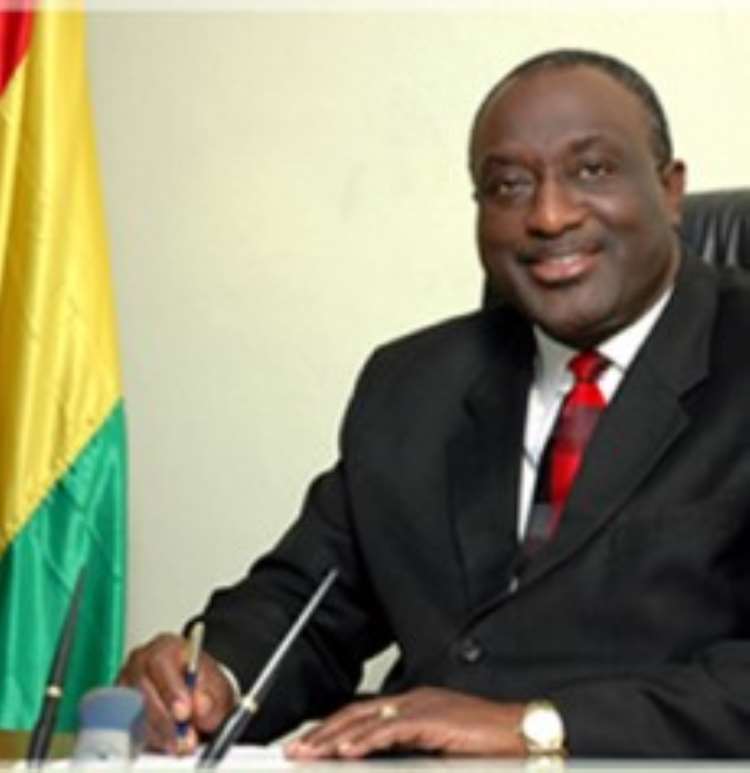
I have followed the race for the next WTO chief in this blog regularly here and here based on press reports. While the race is heating up, unexpected runners are coming into the fray. The WTO website announced that Ghana, on 17 December 2012, nominated Mr Alan John Kwadwo Kyerematen for the post of WTO Director-General.Jordan had also planned to put up its candidate.
<b></b>

Reflecting on the concerns of less developed countries interests at the WTO, Ghana's candidate got support from some press reports here:
"From the mission, functions and principles of WTO highlighted above, it is clear in theory that the WTO is committed to serving the collective interests of all member states. In practice however, the role of WTO as a conduit for improved and democratic international trade has been very controversial as it seems to serve the interests of predominantly the major nations and multinational enterprises. It continuously remains governed by world superpowers to the detriment of the voiceless economies. Can we expect a more responsive, representative and sensitive global trade governance with the election of yet another illustrious son of Africa – Mr. Alan Kwadwo Kyerematen - as the Director General of the World Trade Organization? 
In order that, the World Trade Organization (WTO) remains focused on its guiding principles, the need to reduce the influence of superpowers is paramount. There should be a redefined commitment to encourage sustained economic development and transparency. Not until this is done, there is little the developing world can do to compete favorably with the advanced world. Consequently, the effectiveness of WTO would be scarcely felt. In the events where the WTO does not give a listening ear to the concerns of the less-privileged nations, the dream and desire to bridge the inequality gap between the north and the south will everlastingly be a hallucination. Taking constructive actions to respect the views of the marginalized in the trade policy-making process is the surest way to address the anti-democratic and non-transparent negotiating procedures characterized by the World Trade Organization (WTO)."
Some questions:

1. Will a Director General (DG) from a developing country or least developed world have a bearing on the interests of these countries at the WTO? Is it a matter of representation only or more substantive efforts can be made to make the WTO more concerned about developing country interests?

2. Will dispute settlement mechanism processes and outcomes be impacted by the nationality of the DG? In a rule-based system, how much impact does a DG from a developing world have on charting the course of disputes?

3. Will the focus of negotiation change because of the concerns of a DG from the south? If the WTO is a member driven organization then to what extent can the Secretariat and DG influence the course the WTO takes?

4. Does the WTO actually favor the interests of the developed economies? Is it as simple as that?


The previous DGs were from UK (Eric Wyndham White), Switzerland (Olivier Long and Arthur Dunkel), ireland (Peter Sutherland), Italy (Renato Ruggiero), New Zealand (Mike Moore), Thailand (Supachai Panitchpakdi) and France (Pascal Lamy).

Jordan, Ghana, New Zealand or another surprise .. whose next?

Update: Costa Rica, on 19 December 2012, nominated Minister Anabel González for the post of WTO Director-General


Thursday, August 2, 2012

Next decade goes to Africa?

I have earlier blogged about Africa being the next hub of international trade and manufacturing, going the China way hereThese interviews provide an excellent overview of the Africa-China trade relationship where the conclusion is that China is accessing Africa mainly for its raw materials while it exports its finished consumer and manufactured goods to Africa. I have also blogged about Africa, in all its diversity, and its role in the multilateral trading system here and here.


An interesting opinion on whether Africa would be the next manufacturing hub of the world replacing China is found in CNN here.
"To be sure, Africa has a number of manufacturing advantages that it has yet to realize. Besides low labor costs and abundant resources, these include duty-free and quota-free access to U.S. and EU markets for light manufactures under the Africa Growth and Opportunity Act and the Cotonou Agreement.

Is this enough to offset Sub-Saharan Africa's generally low labor productivity relative to that of its Asian competitors?

Yes, if Africa can implement appropriate supportive policies to leverage its opportunities soon. This is the finding from a recent book by a team of World Bank economists. China dominates the global export market in light manufacturing, and its competitive edge far exceeds that of low income exporters that recently entered the global market.

But steeply rising costs of land, regulatory compliance, and especially labor in China's coastal export manufacturing centers have begun to erode the latter's cost advantage, a trend likely to accelerate in the coming years.

The ongoing redistribution of cost advantages in labor-intensive manufacturing presents an opportunity for Sub-Saharan Africa to start producing many light manufactures, enhance private investment and create millions of jobs."
The book referred to above titled "Light Manufacturing in Africa: Targeted Policies to enhance Private Investment and Create Jobs" gives an overview of the measures needed to be undertaken to overcome constraints in the African context and promote "light manufacturing" sector in order to boost growth and jobs.

Will African continent be the next big player in the globalisation game? Will it be able to use the multilateral trading system to pursue its developmental agenda? The diversity and interests of African countries are varied and complex. Clubbing them into one monolithic entity of the "African" interest may not be ideal in the context of international trade. After all international trade is largely guided by strong, national business interests and how a country interprets global trade rules to pursue one's agenda legitimately. Can the African countries build capacity and expertise to engage with the multilateral system?

I have come across two splendid blogs on the African perspective on international trade. One is by Lynette Gytonga and the other by Henri Joel Nkuepo. Will the next decade be Africa's decade?

Tuesday, May 8, 2012

Africa and Middle East - new trade hubs?

A lot has been written about China's growth after its accession to the WTO  in 2001. China's aggressive domestic policies have ensured Chinese goods enter new, expanding markets. I personally experienced three instances recently of the all "pervasiveness" of the growth of Chinese products.


1. Local toys in local shops seem to be the preserve of the Chinese. The other day I noticed that even toys used in traditional Indian festivals are now made in China!


2. I was flying on a domestic air carrier. The ear phones offered in a plastic cover indicated it was made in China.


3. A few days ago a Japanese Professor visiting me presented me with a small LED reading light that can be attached to books for night reading. After explaining the latest Japanese technology behind the light, he looked up and said "Made in China"!

A Deliotte Research Publication  has come out with its Global Economic Outlook 2nd Quarter 2012 in which a chapter on "Trade Patterns of the Future" looks interesting. Predicting, surprisingly, that China may lose its pre-eminent position the authors have averred:
"It is quickly becoming apparent that China may be losing its status as the “factory of the world.” Cost economics that long worked in China’s favor have come full circle; domestic wages are on the rise, eroding much of the cost arbitrage offered to foreign companies. Even Chinese companies are affected as improving living conditions in the hinterland discourage potential migrants from seeking work in urban coastal provinces. Furthermore, an aging population in the next decade will likely weigh down labor supply and impact wage competitiveness. As Chinese production moves up the value chain, workers are demanding higher wages, better working conditions, and added welfare benefits. Thus, rising labor costs, along with pressure to loosen control on its exchange rate, could pose a serious threat to China’s international competitiveness if productivity does not correspondingly improve."
Authored by the Dr.Satish Raghavendran and Neha Jain, the chapter predicts that the new trade hub would be Africa and the Middle East.
"As economies in Sub-Saharan Africa and the Middle East develop and open up to trade, links between Asia, the Middle East, and Africa are expected to flourish. Economic integration between these regions and the emergence of South-South trade will likely result in the formation of influential trade hubs. The trade of the future will be determined by the availability of cheap resources and the destination of final demand itself. Some firms in developed economies have already begun to question whether the challenges of outsourcing their production processes outweigh the benefits of producing locally.

In this respect, Africa and the Middle East offer both low-cost production capabilities as well as a rapidly growing domestic market. While there are political and economic risks, a burgeoning consumer base will likely induce foreign business to navigate these markets and leverage locally available resources in a more cost-effective way. Supply chain disruptions following the earthquake in Japan also have highlighted the challenges of extreme specialization and reliance on a few economies. Another advantage that the Middle East and Africa offer is the close proximity to European markets. Thus, the emergence of Africa and the Middle East as new trade hubs is likely to play a pivotal role in connecting people, products, and technology."

Would this be the future of trade patterns? Would China's dominant position in today's growth story be challenged? China itself is seriously engaged with Africa as I had noted in this blog piece. Africa's percentage of world trade and intra-Africa trade is very small. Some argue that Africa needs to boost its internal productive capabilities before relying on trade as a weapon of growth. Will it be the end of "Cheap China" making way for a resurgent "Africa" and middle east? One has noticed that the Chinese State has played a pivotal role in structuring its domestic policies to ensure China plays an active part in the international market. Some have called it protectionist while others argue that it has been an intelligent and aggressive use of its international space. Will the African and middle eastern countries have the same strategy? Is it too premature to predict a Chinese decline?