Showing posts with label Protectionism. Show all posts

Monday, May 13, 2013

"Made in California" labelling - Protectionism?

We are familiar with the Buy American provisions. Now a proposed Bill in California that encourages "Made in California" labelling is making the news. News about it is found here. The Bill is found here.

The purpose of the Bill is stated here:
"The Made in California Program, a public and private collaboration, is hereby created within the Governor’s Office of Business and Economic Development. The purposes of the program are to encourage consumer product awareness and to foster purchases of high-quality products manufactured in this state."
Private businesses can participate in the program on a voluntary basis. I am not sure if there is a GATT violation here but the Canada-US Blog termed it as State Protectionism.
"Canadian manufacturers and exporters should be concerned about the proliferation of State Buy America initiatives. This is just one example of a developing problem for cross-border trade."
It may just be a labelling program without any international trade law implications. Or who knows - a Canada-Us dispute at the WTO?

Wednesday, May 1, 2013

Krugman on protectionism

While there are allegations that the protectionist trend across the world is increasing due to sluggish global economy recovery, Paul Krugman believes that as compared to the Great Depression in 1929 countries have not shown a protectionist surge this time around. The chief reason for this, he opines in his NYT op-ed, is the fact that an institutional framework perhaps exists to deal with protectionism:
"So why, exactly, aren’t we seeing more protection? Why aren’t politicians — even conservative politicians — looking at the situation and saying, hmm, a tariff won’t increase the deficit, it won’t involve debasing the currency, but it could clearly help create jobs? 
One answer might be the “Smoot-Hawley caused the Depression” thing; this isn’t true at all, but it might be serving the purpose of a noble lie. 
Or maybe it’s the structure of trade agreements. The countries that arguably could really, really use some protection right now are inside the European Union, so no go. Countries outside still know that any protection they impose will lead to big problems at the WTO; the United States has to know that a protectionist response would break up the whole world trading system we’ve spent almost 80 years building."
I am not so sure that the protectionist trend has subsided. A look at the WTO disputes and proceedings of the various Committee meetings, especially the ASCM, at the WTO indicate that countries continue to impose tariff and non-tariff barriers as well as prohibited subsidies, inconsistent with WTO rules, to protect domestic industry. Perhaps the extent and scope of these measures have lessened over the years.It may be a matter of degree rather than fact.It also depends on what you define "protectionism" as.

Sunday, March 24, 2013

EU, Protectionism and a strategy

For those interested in the EU's views on protectionism and trade one can look at the Trade and Investment Barriers Report 2013. I am not going into the specifics of the report (it is a wealth of information of EU's perception of trade barriers implemented by other members of the WTO) and the views expressed but the broad strategy on how to tackle trade barriers seems to be clearly outlined. It lists 4 broad strategies:

1.Trade Diplomacy
2. Dispute Settlement
3. Effective use of WTO Committees 
4. FTA negotiations

The broad strategy is detailed here:
"Against the evidence of rising protectionism around the world, the European Commission will continue to ensure that the EU's trading partners stick to their commitments and keep their markets open. Firstly, it will use the trade diplomacy instrument, leveraging on EU's global network of Delegations and working closely with the EU Member States. Secondly, it will use the WTO's Dispute Settlement Mechanism and the EU's presence in WTO Committees to enforce international trade rules. Finally, the European Commission will use negotiations for bilateral trade agreements and WTO accessions to address certain specific trade disruptive measures in third countries."
Some tips to be picked up by other WTO members on how to use international trade rules to pursue national interest?


Wednesday, February 13, 2013

The Offshoring debate in The Economist

The Economist recently had this lively debate on outsourcing/offshoring which is a politically sensitive topic in several developed countries. Do MNCs have an obligation to outsource/offshore less and address the issues of unemployment within their own countries? While the debate and comments offer valuable insights on the issue, Jagdish Bhagwati held the position (not surprisingly) that globalization does more good than harm.
"There always were criticisms of "cosmopolitan" multinational corporations (MNCs) which "lacked loyalty" to their home country, seeking to migrate where their returns were the greatest. There were also critics who argued that a country had to have "national champions": how could Danone be allowed to become rootless, sold to the highest bidder who owed no loyalty to France and the French? Did Nokia not betray Finland when almost 90% of its shares were held by investors outside Finland? MNCs were also outsourcing worldwide, so it became increasingly difficult to think of a Volvo as a Swedish product (except in its origin) when its parts came from everywhere and were even assembled abroad in Mexico and not in Sweden. 
The world has become more integrated since these criticisms surfaced in the 1990s, with MNCs and their products becoming less and less identifiable as American or French. One would have thought that, by now, reality and the benefits of closer integration would have silenced such criticisms, or at least muted them. But the motion suggests that the critics have found a new and superficially more reasonable voice. Yes, it says, MNCs can become cosmopolitan on several dimensions. But they owe it to their countries of origin to maintain a "strong presence" in them."
What implications does this debate have to the "Made in the world" concept that is gradually entering the trade lexicon - implying that a good is not made entirely in any single country but is sourced from different parts. Should goods be increasingly made in a single country? Should companies reduce or stop offshoring or outsourcing their operations so that goods can be completely manufactured in their own country in order to increase employment? WIll it lead to increased local sourcing of products? Can it lead to a "protectionist" trend? What is the implication of this for the competitiveness of the business? How does one balance the issue of growing domestic unemployment and increasing economic necessity to outsource/offshore for economic gains? Are the profit maximizing interests of MNCs and interests of nation-states of reducing unemployment at cross-purposes?


Thursday, February 7, 2013

Is economic nationalism and protectionism the same?

I have often written about the issues of protectionism, globalization and the role of the State in this blog here and here.Often, the role of the state and market are seen as mutually exclusive. Increasing globalization and integration of markets is seen as a natural corollary to the reducing influence and role of the State and government. However, is this analysis true? China is often taken as an example that defies this logic of increasing connectedness to the globalized market while retaining strong state presence. Is there a middle path where the role of the State and market and co-exit which is not antithetical to world trade rules? Is there a legitimate role for the state to play apart from being a facilitator and regulator? Is state intervention always protectionism? Can protectionism also exist in highly liberalized markets with other forms of State support?


Yale GlobalOnline has a refreshing piece by Anthony P. D’Costa on economic nationalism, role of the state and globalization. He essentially avers that the state can play a role of a promoter instead of being "protectionist" in a globalized world.He brands this as 'economic nationalism" wherein the State does not necessarily retreat but plays a more constructive role in promoting the welfare of its citizens.

"The concept of economic nationalism is used for selective engagement with the world economy. Rather than the orthodox notion of economic nationalism, defensive in nature and nation-centered, I offer a more dynamic understanding – economic nationalism in motion. This version, first proposed in theReview of International Political Economy, 2009, suggests that the practice is influenced by pragmatic considerations rather than ideology – akin to Deng Xiaoping’s proverbial cat that catches mice irrespective of its color – especially under fluid circumstances of economic growth, emerging competitive industries and, most importantly, as national capitalists mature. Earlier economic nationalism meant protection; today it’s promotion, though the basic motive for both is ensuring national economic interests. This ability to navigate changing circumstances and priorities pragmatically contributes to the dynamic movement of the practice of economic nationalism. 
Behind economic nationalism in motion is a particular kind of state-business nexus where the two operate in a public-private partnership. The key difference with this form is that the state explicitly promotes national capital at home and abroad for national economic gain, although prestige can also play a role, when a public-relations agenda drives hosting a major sports events or acquiring state- of-the-art technologies for pet projects without thorough cost-benefit analysis. 
Fostering national economic development and competitiveness, promoting national companies and brands, is part of the economic-nationalism-in-motion portfolio. Market-driven globalization is not incompatible with state intervention. States must identify the conditions under which such economic nationalism can be undertaken and the instruments at their disposal to negotiate the forces of economic globalization."
Thus, in this model all state intervention and promotion is not necessarily viewed as protectionism. Active state involvement to safeguard national interest, branding, promotion of national corporations (State Capitalists) are all part of this mission. Is this compatible with WTO rules? Is there anything in the GATT/WTO that prohibits this? Is this the middle path that emerging economies should undertake to negotiate globalization without abandoning it? However, there is a thin line between State involvement and control - and one must tread that line very carefully.


Thursday, January 24, 2013

Race for the WTO DG's position

The race for the post of the WTO's DG position is all set for a close finish with 9 candidates in the fray. I have blogged about it here and here. The IELP blog had this detailed post on the implications of the race for the future of the WTO here. The Washington Post has summarized the race as a "worldwide scramble" for the post here. Indonesia's candidate's potential was highlighted in this post.The China Daily had this view on the issue.The coming months will see increased statements and posturing by the candidates on the future of the WTO, multilateral trade and the fate of Doha. Some highlights of the agenda that the discourse is taking is here:

The Mexican candidate as per this report "has pledged to "fight protectionism" amid the global economic downturn and promised efforts in concrete terms and in every sense to protect the free flow of goods in international trade".

The Brazilian candidate focussed on the Doha round when he remarked that "The impasse in Doha Round negotiations has resulted in serious and concrete differences among the member states. “Therefore, it’s fundamental that the future director general be able to move easily among the different groups of countries, regardless of their level of development, without imposing views on anyone and trying to forge all possible consensuses.”

Talking about the WTO, the Kenyan candidate, as per this report, has stated that “There is a need to protect it from the onslaught of protectionist measures that have and may be introduced and to take stock of what has happened with” the Doha Round of talks that seeks to cut farm aid and crack open markets."

Candidates seem to be espousing the virtues of free trade, less tree barriers, free flow of goods and the dangers of protectionism. The revival of the Doha round too seems to be on the agenda of a few. How critical is the Doha round to the future of the WTO itself? How critical is the choice of the next WTO chief critical to the institution of the WTO itself? A succinct analysis of the issues involved and the questions at stake is provided  from the Law offices of Stewart and Stewart which concluded:
"The direction of the WTO is only partially driven by the selection of the Director-General. Nonetheless, at the present time, it is fair to say that the choice of the Director-General can make a difference in the trajectory of change the organization will undergo over the next four years."
We will see more debate and discussion on the issues of protectionism, multilateral negotiations and the future role of the WTO in the submissions made by the various candidates canvassing for the top position. Some lessons for the future may be culled out from this discourse.


Tuesday, January 22, 2013

Limiting global trade governance - what should the contours be?

I have often blogged about domestic policy space and international trade rules on this blog. The intrusion of trade rules into legitimate regulatory spaces is often a source of tension and opposition by governments.What should the limits of trade rules, embodied in multilateral, plurilateral and bilateral trade agreements, be? Who defines their limits?

Simon Lester has this piece in Voxeu on the extent of global trade governance arguing that it should be minimilistic with a focus on combating protectionism rather than be a over-prescriptive regulatory regime.
"Global trade rules that focus on protectionist trade barriers are limited and targeted, addressing a specific problem: protectionism. In doing so, they maintain a balance between international oversight of domestic policies on the one hand, and domestic regulatory autonomy on the other. Countries are free to take whatever actions they want, as long as they are not being protectionist."
Countering Richard Baldwin's contention that global supply chains need more intervention by the WTO (about which I have blogged here and here) to remain relevant (in other words to be regulating many areas within the regulatory space of sovereign countries), he argues that the WTO should stick to addressing the issues of protectionism while the other issues of intellectual property rights must be left to national governments to regulate.
"But let me suggest an alternative interpretation. These bilateral and regional agreements have developed because that's where business groups want the rules to go. The rules in these new areas are in their interest and they would like to see them spread. Unfortunately, business demands do not necessarily lead to a sustainable vision of global trade governance. What business wants is not necessarily in the broader interests of society, although in some cases it may be. The push-back against these new rules has been very strong and it is not clear that the current regional trade agreements and bilateral investment treaties model can really work in the long run. It may be that the WTO as it stands now actually gets the balance between global trade governance and domestic regulatory autonomy about right. 
Under this interpretation, the WTO does not need to catch up. Rather, the WTO should focus on what it does best: that is, reducing protectionist trade barriers. Broader issues, such as intellectual property and regulatory expropriation, should be left to governments to deal with on their own. Those who handle these issues well will be the winners in the new world of supply-chain trade."
It is all about getting the balance right - a balance between national autonomy and global trade governance. Where does one draw a line in an area where definitions, perceptions and priorities are varied and often conflicting. It is easy to seek a middle path - to achieve it is an extremely demanding proposition.


Friday, January 18, 2013

Trade, Labour and some concerns

The linkage between trade and labour has been a contentious one. Should there be more discussion on labour standards and migration in trade negotiations involving trade liberalization? I have blogged about this issue here and here.

Anuradha R.V. and Nimisha Singh Dutta have provided this excellent analysis of the relationship between trade and labour standards in this study titled "Trade and Labour under the WTO and FTAs" in a study for the Centre for WTO Studies. Making detailed study of the labour provisions in various PTA's across the world, they have provided a set of recommendations which essentially concludes that any linkage of labour and trade must be resisted by developing countries.
" 1.Maintain opposition to the Trade and Labour linkage: While all countries (including the countries which have not ratified the CLS) should take steps towards promoting labour welfare, there are no reasons why developing countries should agree to linkage of labour issues in trade agreements. There is sufficient literature and evidence to show that increased labour will not result in decline in labour conditions; on the contrary greater economic development through expanding trade opportunities would actually result in better conditions for labour as well..."
While improving labour standards has to be a national policy concern, linking it to trade is problematic due to the protectionist overtones it has.Could countries use it for protecting their products from increased competition. Is it happening already? Do we have evidence of protectionist measures based on labour standards? Is the public morals clause unde Article XX GATT capable of being used to advance labour standards? Is the TBT Agreement the new arena where labour standards will be played out? There is an other issue of stakeholders here - the government, tree associations, the business owners, labour unions as well as the individual labour. Do all of them have the same interest in this debate? What constitutes national interest - increased labour standards or increased competitive pricing of the product or an international labour standard?


Tuesday, January 15, 2013

Trade and the fostering of peace

Does international trade reduce the risk of war amongst trading countries? Are they less likely to get involved in a political or military conflict than if they were not strong trading partners? Pavel Yakovlev seems to think so. 

Watch this video for a viewpoint that trade promote peace. 

Similarly, does protectionism amongst trading partners provoke a possibility of military conflict or political tension? 


Saturday, January 12, 2013

Trade collapse and protectionism - An NBER analysis

The global economic downturn in 2008-09 has been commented upon and analyzed extensively. Did it also lead to a growing trend of protectionism during this period? Since economies floundered and international trade fell drastically, one would expect that protectionist measures played a key role during this time.

The National Bureau of Economic Research (NBER) in a recent report interestingly downplays the role protectionist measures had in causing the economic slowdown. Analysing tariffs and non-tariff barriers imposed during this time, the report titled  "The Great Trade Collapse"  comes to the conclusion that protectionist measures were not the main reason for the slowdown of the global economy.
"During the early stages of the trade collapse, many worried that the macroeconomic crisis would provoke a repeat of the destructive spiral of protectionism that broke out during the Great Depression. With this backdrop in mind, we review evidence on changes in protection during the crisis in this section. By and large, there was not a significant shift toward protectionism during the trade collapse. We close this section describing several explanations regarding why protectionism may have been muted."
Detailing out the possible reasons as to why protectionism did not rise to the extent it probably should have due to the economic crisis the report explains:
"The resilience of the open trading system was a victory for both the political consensus and institutions that underpin the global economy. The fact that there was no strong protectionist response to the crisis begs the question: why was protectionism contained? There are several lines of work that suggest answers, though more work is certainly needed to answer this question. 
First, the institutional architecture of international trade – including the WTO and regional preferential agreements – may have served to manage protectionist pressures. For example, the ability of countries to adopt WTO-legal temporary trade barriers may placate the most injured or politically powerful industries, alleviating pressure to adopt more comprehensive or permanent barriers. Moreover, though WTO tariff bindings exceed applied tariffs in many cases, preferential agreements shrink the genuine discretion that countries have in adjusting tariffs after a crisis.49 More generally, the role of the WTO as a forum for monitoring trade policy and exerting moral suasion in discouraging protectionism is also likely important, though extremely difficult to quantify.

Second, some have argued that the political economy of trade policy has changed with the rise of cross-border foreign direct investment and supply chain fragmentation. For example, use of imported inputs likely induces firms to lobby for freer trade, offsetting traditional lobbying for import-substituting protection. Gawande et al. present suggestive evidence that vertical specialization in production at the sector level is negatively correlated with the level of tariffs across sectors and changes in tariffs during the 2008-2009 crisis in some important emerging markets (e.g., China). 
Third, one way in which the 2008-2009 crisis differed from the Great Depression was that most countries had flexible exchange rates, and hence the ability to respond to the crisis using macroeconomic policy rather than trade policy. Looking at the Depression episode, Eichengreen and Irwin (2010) point out that countries that stayed on the Gold Standard were significantly more protectionist than countries that floated their exchange rates. They argue that countries that stayed on gold resorted to trade policy as a second-best form macro-policy, rather than due to protectionist pressures per se."
The growth of protectionism in the last few years have been criticized for denting the multilateral system. Are we overstating the threat of protectionism? Is world trade still largely based on a rule-based system with exceptions of protectionism or are we moving towards a more protectionist world? Is the international legal framework robust enough to address the issue of inward looking measures that are inconsistent with multilateral trade rule principles? With the definition of "protectionist" itself being contested (see this piece that states that neo-protectionism in a varied form will rise), could we see new interpretations of trade rules to justify seemingly protectionist behavior?


Saturday, December 29, 2012

Pragmatism, ideology and the middle path

Tread the Middle Path has tended to tow a moderate line on issues - avoiding ideological extremities and positions. There is always a middle path on several contentious issues that one can find if one is willing to rise above ideological prejudices. This is not to imply that ideology is in itself not worth following - it must be tinged with the realities of the time.

This piece titled "Defending Ideology" in the context of free trade by Tibor Machan refers to the ideology of pragmatism - referring to a belief in something that works, is practical and feasible. However he also refers to the importance of an ideological position.

"It is very common among intellectuals in our time to demean ideology. Thus if one supports, say, free trade with foreign firms, one is belittled for doing so on grounds of one's conviction that free trade is generally better than trade that is regimented by government. A "free-market ideologue" is what one is snidely called in such circumstances....
 
Pragmatic justifications usually focus on whether a policy works, whether it is practical. But how is that ascertained? How do we know whether a policy works? Well, is there sufficient evidence that it achieves the goal or purpose for which it is proposed? 
In the case of international free trade that goal or purpose would be mutual wealth creation. If through such trade the parties gain more wealth than by some other means, like government planning – setting quotas, protectionism, etc. – then free trade will have been pragmatically justified or vindicated; it will have been found the practical, workable policy to follow.  
... 
Then, of course, pragmatism is itself an ideology or theory of action wherein what is workable, practical, is preferred as against what isn't. Why should people proceed only when their objectives are feasible? Pursuing the impossible dream could well be a good policy for purposes of gaining stamina, for honing one's tenacity and grit. 
There is really no hope in resting proper public or even private policies on nothing more than that they are practical. Human beings need also to be sure that their choices, including those pertaining to public or political policies, are worthy, have overall merit, square with a proper moral outlook. Belittling that goal by labeling it ideology is a cheap shot. The issue should be which ideology makes the best sense not whether something is ideological."
Ideological positions in matters of international trade are bound to exist. We see it especially int he context of domestic policy space independence. Is the international economic order a neo-imperialist design or is it a boon for the developing world? Does trade with reduced barriers help countries to grow or does it stunt growth? While ideological positions are important to provide a historical perspective, it is also necessary, I think, for countries to take pragmatic, practical steps in order to benefit from the international economic regime. Merely criticizing it and rejecting it would neither provide the benefits. Engaging in a manner that pursues one's national interest in the context of the overall limitation of international rules seems to an ideology in itself worth pursuing. 


Wednesday, November 28, 2012

Buy local?

"Buy local" seems to the the flavour now. It made news in France over demands of separate shelves in super markets selling French made goods while the U.S.Olympic national dress issue grabbed headlines for a few days. However both these were not "State measures" and hence were outside the purview of WTO provisions. An interesting discussion on this issue in the comments section of this IELP blogpost initiated by Marc Benitah made very interesting reading.

(Courtesy:vculevis.wordpress.com)

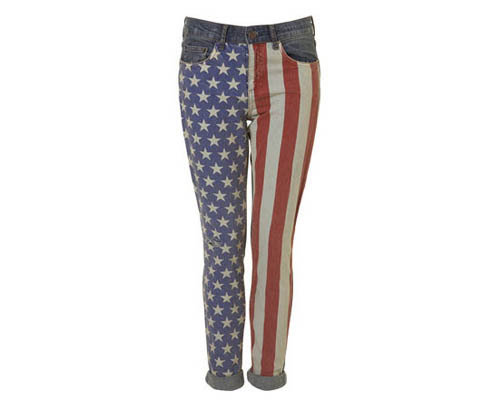
Ever wondered where your pair of jeans was manufactured? This blogpost from the American Federation of Labor and Congress of Industrial Organizations (AFL-CIO) espouses the cause of "buy American" to boost the American economy and jobs. 
"Buying American isn’t just an antiquated idea. Our future as a nation depends on reviving our economy to create good jobs that allow those who put in a fair day’s work to receive a fair day’s pay: to raise families and send the next generation to college. By supporting American manufacturers, we can all do our part to be America’s real job creators. For more ideas on reviving the American economy, go to www.aflcio.org/Issues/Jobs-and-Economy/Economy."
They make the point that a strong industrial base and buying local was always part of the U.S. growth story and one should encourage buying local in housing, food and clothing. Three websites of "buy American" emphasize the point of the advantages of buying local as compared to imported goods - Still Made in USA.com, howtobuyamerican.com and usonly.us 

Now, this is not an executive of the State and hence would not amount to a "State measure" which can be challenged at the WTO. However, the intent of making a choice between local and imported goods is clearly there. It is an exhortation to people to be "patriotic" and buy local and shun imported goods. Wonder what the free traders would have to say to this? Is there a middle path here? Local for some products, international for others, perhaps?


Wednesday, November 21, 2012

Ukraine, tariff and domestic policy space

I have blogged about Ukraine's tryst with the world trading system in the context of the Australian Tobacco Plain Packaging legislation challenge here. KyivPost recently reported that the Ukrainian Parliament has decided to raise the import tariffs to the maximum level of bound tariffs under the multilateral trade rules.
"The Ukrainian parliament is to increase the import duty rates for around 100 commodities to the maximum level agreed by Ukraine and the World Trade Organization (WTO) from January 1, 2013."
Ukraine has also been in the news for the use of GATT Article XXVIII tariff renegotiation. Is this latest step of increasing tariff rates to the bound levels a sign of protectionism or exercise of domestic policy space? 


Saturday, November 17, 2012

Pascal Lamy on the "fallacy of protectionism"

I have often blogged about the growing signs of protectionism in recent times.While some are manifested in "buy local" measures others are in the form of increased "import licensing" measures. Though countries espouse less protectionism, the facts indicate that countries in times of crisis do tend to look inward to protect domestic industry, growth and interests.

Pascal Lamy in this post titled "The Fallacy of Protectionism" in YaleGlobal Online has highlighted the dangers of a protectionist world in the context of global realities of trade. Referring to the global supply chains and the active role WTO has played in monitoring international trade, protectionism though in existence, is not as pervasive as it could have been.
"The internationalisation of production that had so visibly bound economies together prior to the crisis was underpinned by the predictable trading environment provided by WTO rules. When the crisis broke, the WTO's combination of monitoring and surveillance and a firm framework of rules worked to deter knee-jerk protectionism.  Since January 2009, the WTO has issued regular reports on governments' use of trade restrictive measures. Together with the United Nations and the Organization for Economic Co-operation and Development, the WTO monitors how the Group of 20 leading economies comply with their pledges to refrain from trade and investment protectionism, documenting new policies to restrict or facilitate trade."
Will the reality of international supply chains, integrated markets and internationalization of production be the key to a less protectionist world? How much of global production is integrated? Pankaj Ghemawat tends to believe that we are less integrated than we think we actually are. Why are there clamours for "buy local" even from developed countries which are part of this integrated supply chain? Is there a difference between global corporations being part of integrated supply chains and countries representing vast majorities who are cut off from the realities of trade? Is there a disconnect between global supply chains and the vast majority of people who vote? Is democratic politics and the pressures of local, domestic interest different from value chain trade and internationalization of production? We need to critically look at this aspect if one has to find answers to some of the discomfiture with international trade and openness in many parts of the world. I am not suggesting that more protectionism is the answer. However, we need to understand what the reality actually is. It surely may be somewhere in between, as usual.


Monday, November 5, 2012

Globalization retreats?

(http://wiki.triastelematica.org/index.php/Protectionism)

Trends of a rise in protectionist measures by countries is considered a serious threat to an increasingly globalized world. While the world is getting connected and "flattened" by global supply chains and mobility, inward looking policies also have made their mark challenging the presumption that globalization is a given. Of course, Pankaj Ghemawat still believes that a large part of economic activity is still "national" or "local" rather than truly global. Parag Khanna,on the other hand believes that the world is moving towards more globalization.

I came across an interesting piece on globalization here. Titled "The Retreat of Globalization" Kevin M. Warsh and Scott Davis posit that the trend of globalization characterized by cross national investments and increased trade is on the decline.
"Trade is the glue that connects the global economy. Trade has grown much faster than economic growth for most of the last few decades, thanks largely to the globalization wave. Only twice since 1982 has global trade growth trailed economic growth. 
But trade has weakened over recent quarters. According to the International Monetary Fund, trade growth volume is projected to slump to 3.2% this year, down from 5.8% last year and 12.6% in 2010. The World Trade Organization recently cut its forecasts for global trade by more than a full percentage point for this year and next. Absent fundamental policy changes, these data mean that the IMF's global GDP forecasts for this year (3.3%) and next (3.6%) are challenging to meet. 
Yet even this cyclical weakness is not the gravest concern. What if the cyclical has become structural, and economic potential is falling? What if the world is getting more fragmented and the gains from globalization are being forgone and forgotten? What happens if policy makers remain preoccupied with short-term urgencies to the exclusion of long-term priorities?"
Protectionism is not the preserve of only a few countries. It is exercised by both the developed and developing worlds in times of economic crisis to protect domestic interests. Whether it actually protects domestic interests in the long run is an entirely debatable issue. Further, whose interests are actually protected is also open to scrutiny. Nevertheless, the increasing trend of "buy local" in France or aggressive "import licensing requirements" in Argentina is only symptomatic of a reaction of countries to address issues of economic crisis in a global world. As long as trade exists, there would be measures of protectionism. To what extent they spread and to what degree they violate trade agreements is the crucial factor.


Sunday, November 4, 2012

Domestic policy space, trade agreements and protectionism - A balance required?

The Tobacco Plain Packaging dispute has reached the doorstep of the WTO. An Australian legislation that mandates that both imported and locally made tobacco products must not have any kind of advertising on the package has been challenged as a violation of Australia's obligations under the WTO. I have blogged about the issue here, here, here and here.

Simon Lester in a recent piece in the Jurist has brilliantly discussed the issue in the context of protectionism, non-discrimination, domestic policy space and international trade. While curbing protectionism (treating imported goods less favorably than local goods) remains the main focus of international trade agreements, it is clear now that trade rules go much beyond it. It impacts not only discriminatory treatment but also whether a measure is an unreasonable restriction on international trade. This has a major impact on domestic policy space since the interpretation of what constitutes a "reasonable restriction" becomes debatable. It has the potential to lead to international trade agreements treading on sovereign decisions disturbing the delicate balance between international law and domestic sovereignty. This often leads to calls for rejecting multilateralism and pursuing unilateral policies in "national interest".
"Complaints about a purely domestic regulation in these international fora may seem odd, but they are a direct consequence of the expanding scope of trade agreements and provide a good illustration of the difficulties for domestic policy-making caused by this broad scope. The complaints highlight an important, but often overlooked, question regarding today's trade agreements: what is free trade? Traditionally, practicing free trade simply meant not being protectionist. However, today's trade agreements go beyond anti-protectionism in a number of ways, which leads to the potential conflict between trade agreements and domestic regulation that we see with the plain packaging cases."
The implementation and interpretation of international trade agreements will constantly face this challenge of balancing competing interests of national, domestic policy making with the imperatives of international trade. Often the line will be blurred and domestic policy choice will be challenged. To what extent this will be accepted by the WTO members is a crucial question. WIth the negotiations reaching a stalemate at Doha, the dispute settlement mechanism will face serious strain trying to balance these competing interests. Should the interpretation limit itself to non-discrimination and be more liberal in allowing domestic space in other cases? Will such an approach ease the tensions and promote international trade? Or should the Panels and Appellate Bodies take a proactive role in ensuring that free trade is not restricted in anyway - whether based on national treatment or otherwise. As Simon correctly points out it is a delicate balance to be treaded very carefully.
"Existing international trade rules are a balancing of competing concerns and interests, developed over the years through a complex negotiating process. Questioning particular aspects after the fact is not without its dangers. Trade liberalization over the past few decades has benefited the world greatly. At the same time, challenges to laws like the plain packaging one risk undermining support for the broader push for such liberalization. It may not be a coincidence that multilateral trade liberalization has stalled in recent years, just as the scope of these agreements has expanded. No matter what the resolution of the plain packaging cases in international courts, they may be a chance to examine just what the goal of trade agreements should be.  
Fighting protectionism is not without its own controversy, but a focus on protectionism, with rules narrowly tailored for that purpose, may avoid sensitive issues relating to health and other social policy regulation, and thus make further trade liberalization, with its accompanying benefits, possible."
Apart from the tobacco legislation, would the stand of Canada in the Canadian Seal dispute also fall under the category of exercise of legitimate domestic policy space? 


Thursday, November 1, 2012

Protectionism - is it inevitable?

The Knowledge@Wharton website had an engaging piece about Argentina's rising protectionism. Argentina's protectionism has been on my blog here, here and here. Titled "The Risks and Rewards of Argentina's Growing Protectionism" the piece highlights the trend, both int he developed and developing world, towards inward looking policies. Is multilateralism and reduction of trade barriers under serious threat? Is the dispute settlement mechanism going to be over burdened with cases challenging protectionist measures across the world. 

Detailing the steps Argentina has taken to turn "inward" over the last few months the pice notes:
"In Argentina, this reality is reflected in a long list of measures imposed over the past year, notes Ernesto O’Connor, a professor of economics at Argentine Catholic University (ACA). These include quotas; non-automatic import licensing, which control imports by linking them to compliance with specific criteria; applications for compensation for tariffs paid by importers who also export other goods with a value that at least equals the value of their imports, and increases in the common external tariffs imposed on 100 industrial products covered by the rules of Mercosur, the economic and political agreement that includes full members Argentina, Brazil, Paraguay, Uruguay and, as of July 31, Venezuela. Beyond this, there are some restrictions on exports of meat, dairy products, wheat and corn that have been in force for five years, aimed at increasing their supply in the domestic market. 
Beginning this year, the Argentine government has also imposed what some call a “foreign exchange trap”, a restriction that makes it impossible for Argentines to buy foreign currency. This policy is also a mechanism for closing the Argentine economy, experts say, because, as a result, it has become more and more expensive for Argentines to travel to foreign countries and for Argentine students to save money in dollars, a practice that has long been common in the country. During the final week of August, the government also imposed on its citizens a 15% tax on their use of credit cards in foreign countries, which makes consumption overseas more expensive for Argentines and encourages them to spend in their own country."

Is this going to be a long term trend across countries - be it Brazil, India, Argentina, the EU or the U.S.? What are the implications of this strategy for multilateral trade? Will it result in further hardening of stands at the negotiating table and heighten tensions at the dispute settlement mechanism? Would it lead to more FTAs and bilateral agreements based on mutual convenience and power equations? Can the WTO intervene at all in this situation? While there have been growing signs of countries taking protectionist steps, are they short term measures which would blow away with the global economic crisis or is it part of a larger national strategy to look at domestic industries and shun international markets. Is it economically feasible or tuned to the international reality of global supply chains and comparative advantage?


Wednesday, October 31, 2012

Is free trade a myth?

Do free trade and globalization have a positive impact on growth, wages and employment? Or do they adversely impact jobs, growth and local employment? I came across a blogpost in NYT's Economix that addressed this issue.

 The blogpost summarizes the views on the negative impact of globalization and free trade on wages and unemployment.
"For decades, economists resisted the conclusion that trade – for all of its many benefits — has also played a significant role in job loss and the stagnation of middle-class incomes in the United States. As recently as 2008, for instance, Robert Lawrence of Harvard, one of the country’s most respected trade experts, concluded that trade explained only a small share of growing income inequality and labor market displacement in the United States.
... 
One reason that economists may be uncomfortable talking about trade’s impact on jobs and wages may be concern that it could set off protectionist responses. And economists are right that expanded trade has certainly been good for the United States. It has brought us better and cheaper consumer goods, opened new export markets, lifted up many poor countries and strengthened American alliances around the world."
Citing studies that confirmed that growth in the U.S. was not taking place in sectors that were involved in trade, regions that faced competition from Chinese competition had higher unemployment and companies that were headquartered in the U.S. provided more jobs abroad than in the U.S. the post concludes that with growing markets in other countries trade should provide a boost to increasing opportunities and wages back in the U.S. A more critical analysis of free trade is found here which argues that the realities of trade in the renewable energy sector, especially solar, should necessitate protection in terms of increased State intervention.

Can we afford to ignore the principles of reduced barriers to trade in today's multilateral trade world? Though it may have a benefit, does it not have a huge cost too? What should the attitudes of countries be in the context of growing domestic pressures to increase trade barriers? While globalizing and reducing barriers may not be politically feasible, is it also economically unfeasible? 


Thursday, October 25, 2012

Labour standards, tomato and trade

As a consumer would you prefer a product from another country made by adopting fair labour standards as compared to one made within the country with unfair labour means? While this is a question of individual conscience, this piece in the National Review raises a similar issue in the context of tomato grown in Mexico and the U.S. While I do not vouch for the veracity of the facts in the piece, it does make a point that international trade at times can be more equitable or justified in certain contexts. 
"Mexican tomato exports to the U.S. have grown rapidly, totaling about $2 billion a year and accounting for half the fresh tomatoes consumed during the winter months; the industry employs some 350,000 Mexicans in Mexico. The Florida farmers have seen their market share shrink and now want the U.S. government to limit the import of Mexican tomatoes.
But not the import of Mexicans. Mexican illegal aliens account for most of the workers in the Florida tomato industry, centered on the town of Immokalee. Worried that the government may get serious about ending illegal employment, the industry has been at the forefront of efforts to import unlimited numbers of foreign workers to slave away in their fields. And I don’t use “slave” to mean the captive form of labor represented by guest-worker programs. I mean actual slaves; there have been numerous slavery prosecutions of Florida tomato growers, whose exploitation of foreign workers is more brazen and appalling than any other industry in the United States."
On the condition of the workers this piece had more detail:
"I've seen estimates that nationally, 70 percent of the low-ranking farm workers are undocumented people from southern Mexico and Central America. These people arrive in this country — they're often shipped here from their home villages — and they arrive in a land where they certainly don't speak English. Many of them don't speak Spanish because they're indigenous so they're more comfortable in these indigenous languages." 
"They're stuck in the middle of the Everglades in some trailer camp. They don't know where they are. They're frightened to go to the police because they're here illegally and also because back home, the police are often thugs and you don't want to go to them anyway. So they're completely vulnerable. They don't want to make any noise — they just want to work, make a bit of money and that leaves them totally vulnerable."
However, there is flip side to this story.What if labour standards are used as a ground to restrict imports of goods? Labour conditions do differ vastly in different countries. Experts argue that the WTO is not the right forum to raise issues of labour standards. It could be used as protectionist tools n the hands of the developed world to restrict imports of products from countries that do not have the same standards as them. Thus while issues of labour conditions, minimum wages, working conditions are critical in the development discourse, linking it to trade may be detrimental to the very workers that it sees to protect.


Wednesday, October 24, 2012

Buy French - Rumblings of protectionism in the EU?

I have blogged about the issue of protectionism consistently whether by the developed world or enveloping countries. The trend is increasing across the globe due to a variety of factors and in various forms. This piece related to the history of the "protectionist" ethos in France.

Reuters recently reported that a French Minister had announced that consumers must encourage buying local French products. Simon Lester, in his inimitable way, has highlighted this at the IELP blog here.

Favouring domestic goods in comparison to imported goods is a clear violation of GATT non-discrimination provisions. However, whether this is a mere statement/intent/pronouncement  or is a clear enunciation of policy is unclear. If it is a statute/regulation/policy a WTO member could challenge France at the WTO. However, if it is only a case of political rhetoric or opinion, there is nothing much anyone can do.

Rumblings of protectionism in the EU?